Your membership has expired

The payment for your account couldn't be processed or you've canceled your account with us.

Re-activate

Lexus ES Hybrid First Drive

Road Test Review

Introduction

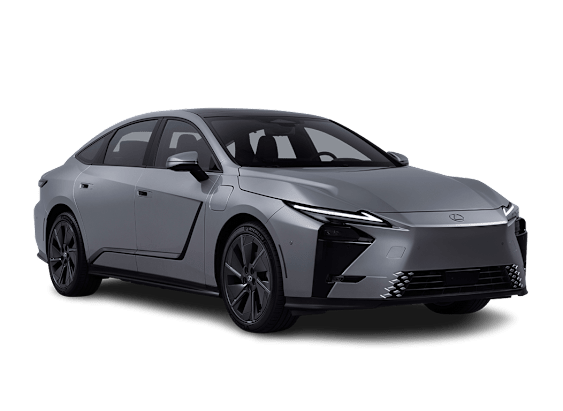
2026 Lexus ES Hybrid Grows, Gains Tech and Modern Vibe

The redesigned sedan is only available with hybrid or electric power

Overview

The comfortable Lexus ES sedan has been a perennial favorite at Consumer Reports, excelling in our road test, reliability, and owner satisfaction scores. After seven years without any major updates, the ES finally got an extensive redesign. The new ES is taller, wider, and longer than the previous model. It’s also more expensive.

  • The Lexus ES Hybrid is thoroughly redesigned, on a new platform. There is now an electric version.
  • Increased dimensions notably benefit backseat passengers, giving them more legroom.
  • The price has increased several thousand dollars, now starting at $49,005 and reaching $57,400.


Buyers can choose from an efficient gas-electric hybrid or an all-electric version. A bold new exterior shares a few design cues with current Toyota models, and the interior is very streamlined. It also debuts an upgraded set of advanced driver assistance systems (ADAS).

It competes with the Audi A6, BMW 5 Series, Genesis G80, and Mercedes-Benz E-Class.

The powertrain is a  244-horsepower, 2.5-liter four-cylinder hybrid engine; electronic continuously variable transmission (eCVT); and front or all-wheel drive.

The price range is $49,005-$55,400.

The final assembly point is Miyawaka, Fukuoka, Japan.

It is on sale now.

Impressions

Outside

The ES rides on a unique version of Toyota’s TNGA GA-K platform, the basic design and shared set of components that also underpins the current Toyota Camry. The major difference is that the ES is longer than any Toyota sedan. It’s longer, wider, and taller than the previous ES, too.

As with so many luxury cars, the ES lost its chrome trim and low-slung look in favor of a more modern, Tesla-like appearance. There’s a distinctive character line across the side and tail lights that wrap around the rear of the vehicle.

Inside

The latest ES has a minimalist dashboard and infotainment setup that marks a departure for the Lexus brand. (The upcoming 2027 Lexus NX SUV gets the same new look.) There’s a new bamboo-inspired 3D-printed trim, along with real suede options, and the window frames are lower than the outgoing vehicle’s for better visibility and an airier feel. The seating position has been raised a bit, which addresses some of the issues we had with feeling like we were “falling into” the driver’s seat of the current ES model.

On the EV we tested, the front seats were all-day comfortable for a long drive. They’re well-padded but still have enough bolstering that you don’t sink into them.

The ES gets the latest version of Toyota’s infotainment system, which responds well, has a home screen to get you out of a menu maze, and features large icons and graphics that are easy to see and use while driving. The climate-control buttons are flush with the control panel; we wish they were distinguishable by touch. Even though they look like they’re part of a touchscreen, there’s a real button underneath each one that registers a click when you press it.

What Drives It

There are no longer any gas-only engine choices. However, the TGNA GA-K platform can fit both hybrid and all-electric powertrains, so the ES 350h gets a 2.5-liter four-cylinder hybrid, an electronic continuously variable transmission (eCVT), and a choice of front- or all-wheel drive. The fully electric ES350e is front-wheel drive and has a single electric motor, while the ES500e is all-wheel drive thanks to dual electric motors. The ES also gets a new multilink rear suspension, promising a smoother ride and better vehicle control.

Safety and Driver Assistance Systems

The ES is the first model that comes with the latest Lexus Safety System+ 4.0 suite of advanced driver assistance systems (ADAS) and active safety features. On the ES EV we’ve driven, adaptive cruise control (ACC) worked well enough on a short highway drive and did a good job modulating a smooth crawl while keeping enough distance from the car ahead. With lane centering assistance (LCA) activated, the car seemed to sway slightly in its lane. The ES can now automatically make lane changes with a quick half-press of the turn signal stalk.

Change Vehicle